
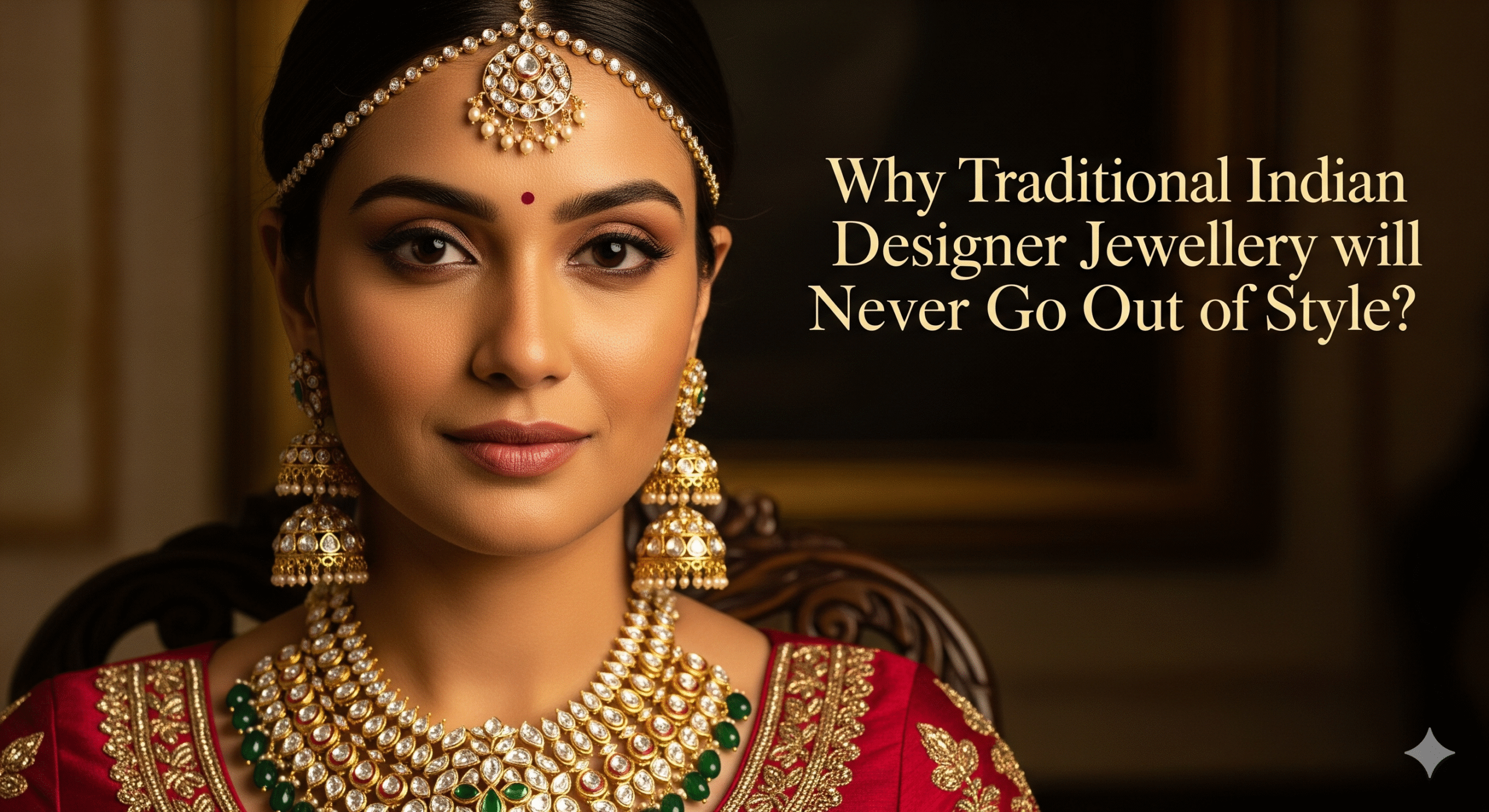
Discover the epitome of luxury and refinement with Bhavya Gems & Jewels

Discover luxury & refinement with Bhavya Gems & Jewels

Why Traditional Indian Designer Jewellery will Never Go Out of Style?

Traditional Indian designer jewellery is the result of our heritage, cultural values and quality craftsmanship. What makes the traditional Indian jewellery truly remarkable is its evergreen charm that highlights our values and culture in its intricate cuts and patterns. Indian jewellers to date value and recreate old traditional designs because they are always in demand. Starting from traditional Rajputana looks in Indian women's designer jewellery to the profound necklaces that symbolise deity and spiritual gods, we have everything. These jewellery designs are a testament to our culture and heritage we hold so dear. Top jewellery manufacturers in India, like Bhavya Gems & Jewels, are bringing back the era of traditional indian designer jewellery because it never goes out of style. Brides adorn traditional jewellery to bring back the charm of old times at their wedding. Additionally, Indian women celebrate their cultural events and occasions in designer jewellery that dates back centuries, when it comes to their intricate patterns and designs. In this blog, we will discuss why traditional Indian jewellery is still significant in 2025, and retailers should keep it in stock to meet customer demands. Significance of Traditional Indian Jewellery and Why is it Never Out of Style Extravagant Maang Tika, Maang Patti and Jhoomar Maang Tika is an essential ornament in Indian culture, where women wear it on their head that symbolising love and commitment, and represents the marital status of women in India. The spiritual significance of Maang Tika says that it protects women from the evil eye and wrongdoings that may hamper their prosperous life. The headpieces in the form of Maang Patti also have a cultural significance. They are made with gold and decorated with the pearl stones that enhance a woman’s natural beauty and add grace to their overall look. Maang Patti is the essential ornament for brides and married women in India. Jhoomer is a cultural and traditional hair piece, which women adorn especially during ceremonies and festivals. The Mughals brought Jhoomar to India, which then became one of the most beautiful and intricate jewellery pieces for women. Most extravagant and even simplistic Jhoomars have mirror work, while some are adorned with intricate embroidery. Heavy Kundan Jhumkas Heavy Kundan Jhumkas highlight timeless aesthetics and our cultural heritage, which are both an important part of the royal tradition of India. Women adorn heavy Kundan Jhumkas that give off a luxurious vibe and add sophistication to their overall look. By wearing heavy Kundan Jhumka, you can create Indian and Indo-western looks, which go well with today’s fashion trends. The versatility in styling the Kundan Jhumkas gives a seamless blend with our day-to-day life. You can create minimalistic looks in your attire, and even wear a Kundan Jhumka with indian western dresses that look opulent when worn for grand occasions. Balis Balis are an essential ornament that women wear in their ears. If you look at the historical relics, sculptures and figurines from the ancient period, you will find women wearing opulent balis. They are elaborate jewellery pieces that accentuate the natural facial features of women. In the medieval period as well, women wore different forms of earrings, including balis, which Indian jewellers carry forward even today. The evolution in design is the result of quality craftsmanship and a change in design technology. To Sum Up Indian jewellery manufacturers are still stuck on traditional jewellery designs because their era is not over yet. They have retransformed the designs to fit the mood and culture we have today. As we carry forward the designs from ancient eras, we see more demands coming in for traditional heritage jewellery that’s still a fit for modern brides at their weddings, events and cultural functions. You can find quality craftsmanship in traditional Indian jewellery offered by top jewellery manufacturers in India, like Bhavya Gems and Jewels.

Posted On: September 5, 2025

Traditional Indian designer jewellery is the result of our heritage, cultural values and quality craftsmanship. What makes the traditional Indian jewellery truly remarkable is its evergreen charm that highlights our values and culture in its intricate cuts and patterns. 

Indian jewellers to date value and recreate old traditional designs because they are always in demand. Starting from traditional Rajputana looks in Indian women’s designer jewellery to the profound necklaces that symbolise deity and spiritual gods, we have everything. These jewellery designs are a testament to our culture and heritage we hold so dear. 

Top jewellery manufacturers in India, like Bhavya Gems & Jewels, are bringing back the era of traditional indian designer jewellery because it never goes out of style. Brides adorn traditional jewellery to bring back the charm of old times at their wedding. Additionally, Indian women celebrate their cultural events and occasions in designer jewellery that dates back centuries, when it comes to their intricate patterns and designs. 

In this blog, we will discuss why traditional Indian jewellery is still significant in 2025, and retailers should keep it in stock to meet customer demands. 

Significance of Traditional Indian Jewellery and Why is it Never Out of Style

Extravagant Maang Tika, Maang Patti and Jhoomar

Maang Tika is an essential ornament in Indian culture, where women wear it on their head that symbolising love and commitment, and represents the marital status of women in India. The spiritual significance of Maang Tika says that it protects women from the evil eye and wrongdoings that may hamper their prosperous life. 

The headpieces in the form of Maang Patti also have a cultural significance. They are made with gold and decorated with the pearl stones that enhance a woman’s natural beauty and add grace to their overall look. Maang Patti is the essential ornament for brides and married women in India. 

Jhoomer is a cultural and traditional hair piece, which women adorn especially during ceremonies and festivals. The Mughals brought Jhoomar to India, which then became one of the most beautiful and intricate jewellery pieces for women. Most extravagant and even simplistic Jhoomars have mirror work, while some are adorned with intricate embroidery. 

Heavy Kundan Jhumkas

Heavy Kundan Jhumkas highlight timeless aesthetics and our cultural heritage, which are both an important part of the royal tradition of India. Women adorn heavy Kundan Jhumkas that give off a luxurious vibe and add sophistication to their overall look. 

By wearing heavy Kundan Jhumka, you can create Indian and Indo-western looks, which go well with today’s fashion trends. The versatility in styling the Kundan Jhumkas gives a seamless blend with our day-to-day life. You can create minimalistic looks in your attire, and even wear a Kundan Jhumka with indian western dresses that look opulent when worn for grand occasions.

Balis

Balis are an essential ornament that women wear in their ears. If you look at the historical relics, sculptures and figurines from the ancient period, you will find women wearing opulent balis. They are elaborate jewellery pieces that accentuate the natural facial features of women. In the medieval period as well, women wore different forms of earrings, including balis, which Indian jewellers carry forward even today. The evolution in design is the result of quality craftsmanship and a change in design technology. 

To Sum Up

Indian jewellery manufacturers are still stuck on traditional jewellery designs because their era is not over yet. They have retransformed the designs to fit the mood and culture we have today. As we carry forward the designs from ancient eras, we see more demands coming in for traditional heritage jewellery that’s still a fit for modern brides at their weddings, events and cultural functions. You can find quality craftsmanship in traditional Indian jewellery offered by top jewellery manufacturers in India, like Bhavya Gems and Jewels.